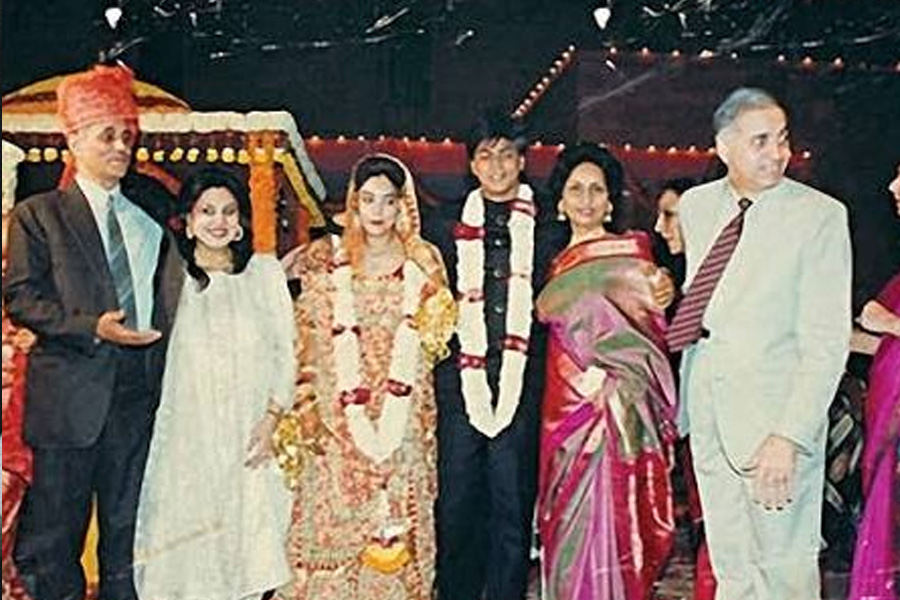
A Private Life Near a Public Fire
Ramesh Chandra Chhibber occupies an unusual place in Indian public memory. He was not a film personality, a media fixture, or a commercial impresario. Yet his name resonates because of the family that grew around him. He is known as the father of Gauri Khan, the father in law of Shah Rukh Khan, and the grandfather of Aryan Khan, Suhana Khan, and AbRam Khan.
That kind of recognition is rare. It does not come from spectacle. It comes from proximity to a family that became synonymous with modern Indian celebrity. Ramesh Chhibber remained mostly outside that blaze. His life reads as measured, reserved, and anchored in domestic steadiness.
Public mentions describe him as Colonel Ramesh Chandra Chhibber. He is commonly identified as a retired Indian Army officer. That military background matters because it frames the tone of his public image. It suggests discipline, composure, and a preference for structure over display.
His birth is recorded as 25 April 1938. His death occurred on 1 March 2016 in New Delhi. Those dates give his story a clear arc. Between them lies a life that was mostly lived away from cameras.
Family Roots and Household Bonds
The Chhibber family is most often discussed through kinship. Ramesh Chhibber’s spouse was Savita Chhibber. Together they built a household that would later become familiar to millions through public association. Their daughter, Gauri Chhibber, became Gauri Khan after marrying Shah Rukh Khan in 1991. Their son is Vikrant Chhibber.
This family structure is simple on paper, but culturally significant. It links a Punjabi household to one of India’s most recognizable entertainment families. Ramesh Chhibber stands at the root of that connection. His role was foundational rather than theatrical.
Gauri Khan’s later prominence as a producer and interior designer brought fresh visibility to the family. Shah Rukh Khan’s global fame amplified that visibility further. Their children, Aryan, Suhana, and AbRam, now carry the family name into a new generation. Through Vikrant, the broader family circle also includes Arjun Chhiba and Alia Chhiba.
The family identity appears interwoven with respectability and public scrutiny. That combination can be difficult to manage. It requires a strong domestic center. Ramesh Chhibber seems to have represented that center.
From Punjab to Delhi
One important detail in the family story is migration. Public references place the family origin in Patti village in Hoshiarpur district, Punjab. Around 1970, the family moved to Delhi. That movement marks more than a geographical shift. It reflects the broader Indian pattern of rural roots meeting urban opportunity.
For many families, a move like that alters daily habits, ambitions, and social horizons. It changes the texture of life. It also changes what the next generation can imagine for itself. Delhi became the setting in which Gauri Khan was raised. She grew up in a disciplined household shaped by order and care.
The move from Patti village to Delhi is important because it reveals continuity across change. The family did not abandon its roots. It extended them into a new urban frame. That balance between inheritance and adaptation often defines durable families.
Ramesh Chhibber’s life appears to sit within that larger movement. He belonged to an older, more restrained generation. Yet his household entered a modern public sphere through the achievements and marriages of his children.
Military Bearing and Domestic Authority
A military career often leaves visible traces beyond formal service. It shapes posture, speech, and expectations. It can also shape a family’s internal rhythm. Ramesh Chhibber’s identity as a retired Army officer suggests that kind of formative influence.
The available public record does not present him as a man of flamboyant ambition. It presents him as someone associated with duty and settled authority. That matters because many public families are defined by loud ambition. His family seems instead to have grown from a quieter discipline.
Military life also tends to reward punctuality, restraint, and practical judgment. Those traits are difficult to verify from biography alone. Still, they fit the outline that public memory has preserved. He appears as someone whose importance was felt inside the home before it was noticed outside it.
That domestic authority becomes especially relevant when a child enters a highly visible marriage. Gauri Khan’s marriage to Shah Rukh Khan placed the family in a larger spotlight. A household with a firm internal compass would have needed exactly that kind of stability.
Marriage, Reservations, and Public Memory
One repeated family anecdote suggests that there were early reservations about Gauri Khan’s marriage to Shah Rukh Khan. That detail is unsurprising. Many families react cautiously when a child’s marriage alters expected boundaries and futures. Such hesitation often reflects care, not hostility.
Over time, the public story suggests that attitudes softened. That progression is human and familiar. Families often move from apprehension to acceptance once intention proves durable. In this case, the marriage endured and became one of India’s most recognized partnerships.
This part of the story matters because it places Ramesh Chhibber inside a living family drama, not merely a genealogical chart. He was not just a name beside a famous daughter. He was part of the emotional architecture around a major transition. That kind of role is rarely archived in neat terms.
Public memory often reduces older family members to labels. Father. Mother in law. Grandfather. Yet those titles conceal years of influence. Ramesh Chhibber likely contributed far more to the household than public accounts can measure. His legacy is partly embedded in the stability of the family itself.
Final Years and Lasting Presence
Ramesh Chandra Chhibber died in New Delhi on 1 March 2016. His cremation took place at Lodhi Crematorium. Public memorial references note the presence of Gauri Khan, Shah Rukh Khan, and Karan Johar. Those details underscore how widely the family’s social orbit extended by that time.
His surviving family members continued to occupy distinct public roles. Gauri Khan remained active in design and film production. Shah Rukh Khan stayed central to Indian cinema. Aryan Khan, Suhana Khan, and AbRam Khan became names of continuing public interest. The family’s visibility widened across generations.
Yet Ramesh Chhibber himself remained rooted in a different register. His memory is not built on performance or business scale. It rests on ancestry, service, and household continuity. That kind of remembrance is less dazzling, but often more durable.
His life also reflects a common but underappreciated truth. Some people matter most through the structures they stabilize. They do not seek center stage. They make center stage possible for others.
Family Profile in Brief
| Relation | Name | Publicly Noted Detail |
|---|---|---|
| Spouse | Savita Chhibber | Wife of Ramesh Chhibber |
| Daughter | Gauri Khan | Born Gauri Chhibber |
| Son | Vikrant Chhibber | Less publicly visible |
| Son in law | Shah Rukh Khan | Married Gauri in 1991 |
| Grandchildren | Aryan Khan, Suhana Khan, AbRam Khan | Through Gauri and Shah Rukh |
| Grandchildren | Arjun Chhiba, Alia Chhiba | Through Vikrant |
This family profile shows how one household expanded into a nationally familiar lineage. The names are more than identifiers. They map the spread of a family across time, reputation, and public attention. Ramesh Chhibber occupies the earliest and most grounding position in that map.
Key Takeaways
Ramesh Chandra Chhibber was a retired Indian Army officer whose public identity was shaped by family and service. He was born on 25 April 1938 and died on 1 March 2016 in New Delhi. His spouse was Savita Chhibber, and their children were Gauri Khan and Vikrant Chhibber.
He is widely known as the father of Gauri Khan, the father in law of Shah Rukh Khan, and the grandfather of Aryan Khan, Suhana Khan, and AbRam Khan. Public references also connect him to Arjun Chhiba and Alia Chhiba through Vikrant. The family moved from Patti village in Hoshiarpur district, Punjab, to Delhi around 1970.
His legacy is not built on celebrity performance. It is built on steadiness, kinship, and the quiet authority of an older generation.


