Early Life in a Famous Family
Victoria Ellen Rothschild entered the world on March 3, 1963.
Her life ended on June 20, 1963.
That span covered only 109 days.
It was a minuscule chronology, yet it remained legible in family memory.
Her mother was Vera Ellen Westmeier Rohe, widely known as Vera Ellen.
Her father was Victor Bennett Rothschild.
The family record identifies Victoria as their only child.
That detail gives her an unusual prominence in genealogical listings.
Her maternal grandparents were Martin Rohe and Alma Rohe.
Alma is sometimes recorded with the maiden name Westmeier.
These names place Victoria within a carefully traced family line.
They also anchor her in a wider domestic history.
A Childhood Measured in Days
Some lives are narrated through decades.
Victoria’s life was measured through weeks and months.
The arithmetic is stark, but it also feels intimate.
Three months and seventeen days is almost a breath.
Yet a breath can still leave a record.
The dates matter because they define her entire public footprint.
March 3, 1963, marks the beginning.
June 20, 1963, marks the end.
Between those dates, there was no childhood memory to report.
There were no school years, no performances, and no adult milestones.
That absence does not erase significance.
Instead, it changes the texture of remembrance.
Her story lives in notation, not in autobiography.
It appears in family references, memorial mentions, and biographical footnotes.
Vera Ellen and the Household Behind the Headlines
Victoria’s name is often encountered through her mother’s renown.
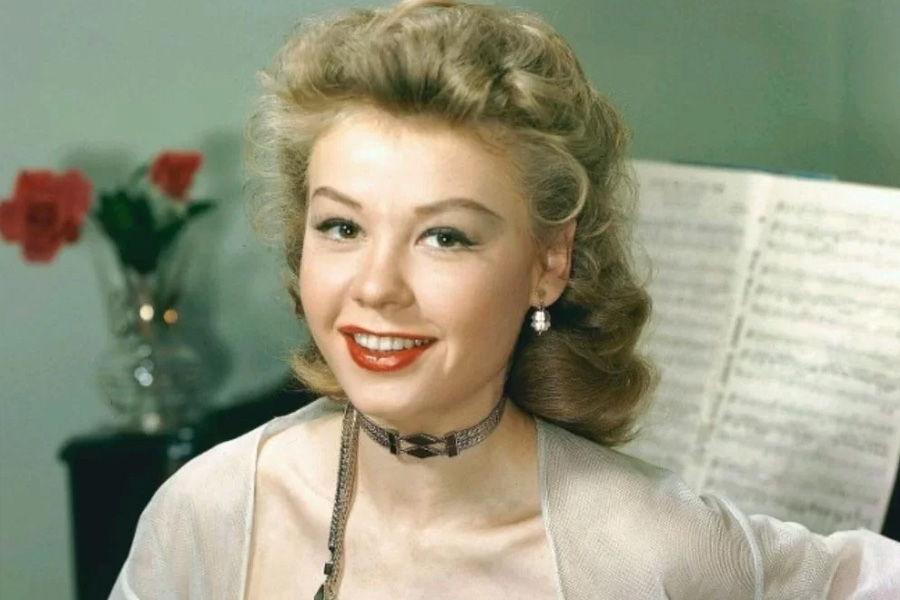
Vera Ellen was a dancer and film actress.
She belonged to the golden age of musical cinema.
Her public identity was bright, kinetic, and exacting.
That celebrity makes Victoria’s short life feel more visible.
People exploring Vera Ellen’s biography often encounter the child’s name.
The contrast is striking.
One figure belonged to stage light and camera glare.
The other existed almost entirely outside public spectacle.
Victor Bennett Rothschild is the other key figure in the family frame.
His name survives in family references and obituary language.
In Victoria’s case, paternal identity matters because it completes the record.
Together, the parents form the narrow corridor around her brief life.
The household context remains private in many respects.
Still, the available facts allow a modest reconstruction.
There was a marriage, a child, and a family line.
Then there was loss, preserved in sparse but durable traces.
Genealogical Traces and Recorded Memory
Genealogical records often preserve the smallest lives with unusual fidelity.
Victoria’s record demonstrates that pattern with unusual clarity.
Her existence is not speculative.
It is attached to names, dates, and kinship markers.
The maternal line is especially visible.
Martin Rohe and Alma Rohe appear as the grandparents.
That placement matters in family history.
It lets later readers situate Victoria inside a real lineage.
Such records can feel austere.
They often read like inventories of kinship.
Yet their austerity has value.
It protects memory from vanishing entirely.
In Victoria’s case, it also prevents distortion.
A short life can be overwritten by rumor.
A stable record resists that drift.
The dates remain March 3 and June 20.
The age remains 3 months and 17 days.
Those facts form the most reliable scaffold.
Public Interest and the Internet’s Restless Curiosity
Victoria’s name attracts attention because of her mother’s fame.
That interest can be affectionate, but it can also become careless.
Online discussion often enlarges tiny facts into elaborate narratives.
This tendency is especially visible around family stories.
Some modern profiles overstate details.
Others invent context where none exists.
That problem is common in celebrity adjacent biographies.
A name becomes a placeholder for speculation.
Victoria’s case invites that hazard because the life was so brief.
The responsible approach remains simple.
Use the dates.
Use the family names.
Avoid dramatic embellishment.
Her story does not need ornamentation to remain poignant.
There is also a broader cultural habit at work.
People often seek completion in every biography.
If a person had no career, they still expect a narrative arc.
Victoria does not supply that arc.
She supplies a reminder that not every life becomes public theater.
A Compact Chronology of the Record
The known facts can be placed in a concise frame.
That frame helps preserve the proportions of the story.
It also keeps sentiment from overtaking accuracy.
| Item | Detail |
|---|---|
| Full name | Victoria Ellen Rothschild |
| Birth date | March 3, 1963 |
| Death date | June 20, 1963 |
| Age at death | 3 months, 17 days |
| Mother | Vera Ellen Westmeier Rohe |
| Father | Victor Bennett Rothschild |
| Maternal grandfather | Martin Rohe |
| Maternal grandmother | Alma Rohe |
This compact table contains almost everything the public record offers.
Its brevity mirrors Victoria’s own life span.
There is little room for embellishment.
That limitation makes the facts feel even more exacting.
The chronology also underscores the emotional imbalance.
The time between birth and death was short, but not meaningless.
Families remember such intervals with particular tenacity.
Calendar precision becomes a vessel for grief and remembrance.
No Career and No Financial Record
Victoria had no career because she died as an infant.
That statement is plain, yet it needs saying.
Many modern biographical pages attempt to assign roles too quickly.
Victoria’s life does not support that practice.
There is likewise no personal net worth to calculate.
Financial language belongs to adult life and public occupation.
Neither applied here.
Any attempt to assign earnings would be fictional.
This absence is not a deficiency.
It is simply the contour of her existence.
Some biographies are built from achievements.
Others are built from relation, timing, and memory alone.
Victoria belongs to the second category.
The simplest phrasing is often the truest.
She was a child of Vera Ellen and Victor Rothschild.
She lived for 109 days.
She left no professional archive of her own.
Why Her Story Still Resonates
Victoria’s story resonates because it is so compressed.
Compression can intensify meaning.
A small record sometimes carries a heavy emotional load.
That load comes from what is present and what is missing.
Her life also reflects the peculiar logic of fame.
Public attention often gathers around celebrities’ private worlds.
Even a brief family event can echo through later biographies.
In that sense, Victoria’s name occupies a delicate historical threshold.
She is remembered not for accomplishments, but for relation.
That is common in family history, yet uncommon in celebrity culture.
The entertainment world usually rewards visible labor.
Victoria’s place in memory comes from tenderness, inheritance, and loss.
Her dates still matter.
They offer a fixed outline within a fluid internet.
March 3, 1963, remains the beginning.
June 20, 1963, remains the end.
Between them lies a life too short for spectacle, yet never entirely absent.
Key Takeaways
Victoria Ellen Rothschild was born on March 3, 1963, and died on June 20, 1963.
Her age at death was 3 months and 17 days.
She was the only child of Vera Ellen and Victor Bennett Rothschild.
Her maternal grandparents were Martin Rohe and Alma Rohe.
She had no career, no public earnings, and no personal net worth.
Her significance comes through family memory and biographical reference.
Her story appears in genealogy, obituary language, and discussions of Vera Ellen.
The record is brief, but it remains precise and enduring.