A Family Rooted in British Rock
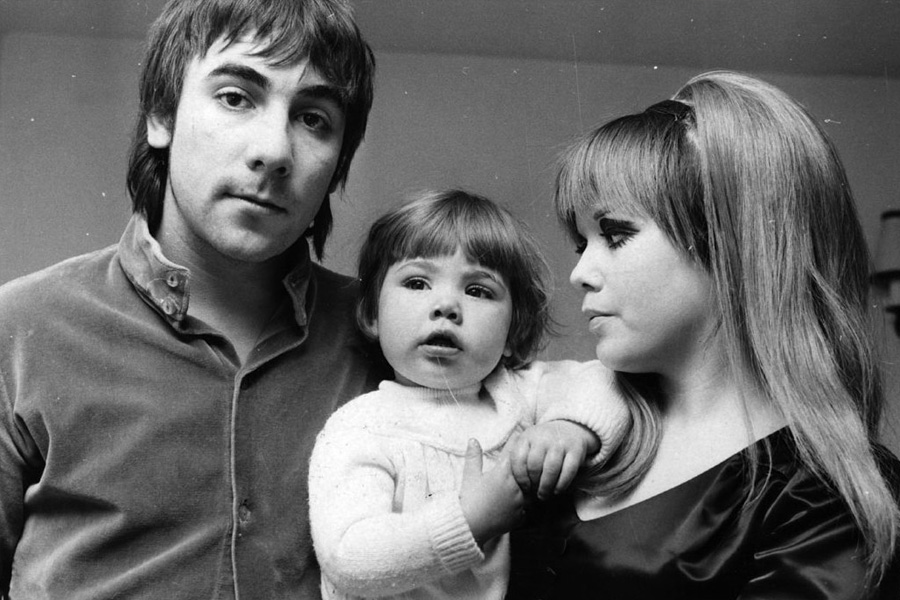
Amanda Jane Moon Dewolf sits at an unusual crossroads of privacy and rock mythology. Her name belongs to a family already etched into music history. Keith Moon, the explosive drummer of The Who, is her father. Kim Kerrigan, later known as Kim McLagan, is her mother. Ian McLagan, remembered from Small Faces and Faces, became her stepfather. That family web gives her biography an immediate, resonant charge.
| Field | Detail |
|---|---|
| Full name | Amanda Jane Moon Dewolf |
| Common names | Amanda, Mandy |
| Reported birth period | Mid 1960s |
| Father | Keith Moon |
| Mother | Kim Kerrigan or Kim McLagan |
| Stepfather | Ian McLagan |
| Public work | Makeup and creative behind the scenes roles |
| Public profile | Limited and largely family based |
Her life is often described through relation rather than spectacle. That can feel restrictive, yet it also reveals something telling. Some people inherit fame as a costume. Others inherit it as atmosphere. Amanda seems to belong to the second category. Her public identity is shaped by memory, not by relentless visibility.
The Family Circle Around Her Early Life
The family ledger surrounding Amanda includes several older names with their own weight. Alfred Charles Moon, often called Alf, appears as her paternal grandfather. Kathleen Winifred Moon appears as her paternal grandmother. Bill McLagan is also listed among the grandparents in the family notes provided. These names create a broader domestic map around the famous drummer.
Such a family structure matters because celebrity rarely exists alone. It rests on kitchens, marriages, separations, and second households. Amanda grew up inside that layered architecture. The glamour of music history sat beside ordinary family realities. That contrast often produces the most durable human stories. It also explains why her name surfaces most often in family discussions and retrospectives.
The public record suggests a birth in the mid 1960s, often around 1966. That places her childhood beside one of rock music very noisy decades. By the time many biographies begin, her father was already a legend. By 1978, that legend became memory after Keith Moon died. For a child, that kind of rupture can define a whole emotional landscape.
Amanda therefore occupies a liminal place in the narrative. She is connected to the loudest chapter, yet she is not consumed by it. Her life appears to have unfolded beyond the stage lights. That distance is important. It gives her story texture without forcing theatrical exposure.
A Life Shaped by Absence and Remembrance
When Keith Moon died in 1978, the family myth changed shape. He moved from living force to historical presence. For Amanda, that shift likely meant carrying a name that others already interpreted. Public fascination often freezes children of famous parents into symbols. In her case, the symbol is softened by privacy. The result is a more subdued, more human outline.
Her mother, Kim Kerrigan, later Kim McLagan, represents another strand of that domestic history. She belonged to the same cultural era, yet her role in the public eye was less aggressive. That matters because family narratives often become too male, too loud, or too stage bound. Amanda stands at the junction where those narratives are balanced by quieter care. The record does not need embellishment to show that tension.
A simple timeline helps the shape of her public era.
| Period | Notable point |
|---|---|
| Mid 1960s | Amanda is commonly reported to have been born |
| 1978 | Death of Keith Moon becomes a major family turning point |
| 1990s | Her name appears in retrospective family and music discussions |
| 2000s | Documentary and film credits begin to surface more visibly |
| Present day | Public references remain limited and selective |
That sequence shows an unusual kind of visibility. Amanda is not absent from the record. She is simply present in fragments. Those fragments are enough to sketch a life, but not enough to expose it. The restraint is striking in an era that rewards confession and oversharing. Her public footprint remains compact and deliberate.
Creative Work and Public Mentions
Public mentions often connect Amanda with makeup and creative work. That is a fitting field for someone who understands presentation without chasing fame. Makeup requires precision, patience, and a good eye for transformation. It is also work that supports others rather than demanding the spotlight. That makes her role feel quietly skilled. It also explains why her name appears in credits more than headlines.
Film listings and documentary references suggest a practical relationship to the entertainment world. She appears as a contributor or interview subject in retrospective material. Those appearances matter because they preserve family memory in a formal setting. They also give context to Keith Moon beyond the usual myths. Amanda becomes a witness to a life that others only describe secondhand. That witness function is valuable, even when understated.
Her public role appears to have been especially modest in later years. There is no evidence of a celebrity reinvention or a loud personal brand. Instead, the record points toward craft, contribution, and occasional recollection. That kind of career path is less theatrical, but often more durable. It also offers a different model of dignity. Not every life near fame needs a marquee.
Amanda is therefore best understood as a behind the scenes presence. She belongs to the entertainment ecosystem without becoming its central spectacle. That distinction matters in cultural memory. Many people know the names attached to her. Fewer know the person carrying those names. Her life resists simplification, which may be its most interesting feature.
Public Interest and the Human Scale
Interest in Amanda tends to arise when people revisit Keith Moon or the wider family network. That means her visibility is often retrospective. Fans search for family details. Documentaries seek emotional context. Obituaries and biographies revisit the same names, then return to her as a private figure. The rhythm is intermittent, not incessant.
That pattern tells us something about how fame behaves over time. It does not merely shine. It also echoes. Amanda appears in those echoes, especially where family testimony is needed. Her perspective adds household scale to a story usually told in concert halls and record sleeves. That scale matters because it reminds readers that famous people have daughters, stepfathers, and ordinary routines.
There is also a subtle dignity in her limited exposure. She does not seem to court tabloid attention. She does not appear to have built a public identity around provocation. Instead, she occupies a narrower, more textured space. That space is harder to monetize, but richer in nuance. It allows memory to remain personal.
People often imagine celebrity lineage as an inheritance of privilege alone. Amanda complicates that assumption. Fame can also bring scrutiny, expectation, and historical burden. A family name can function like a lantern and a shadow at once. Her story reflects both qualities. It shows how inheritance can illuminate while also enclosing.
Key Takeaways
Amanda Jane Moon Dewolf is best understood as a private figure with a powerful family backdrop. She is the daughter of Keith Moon and Kim Kerrigan, and the stepdaughter of Ian McLagan. Her grandparents and family names place her within a dense British music lineage. Yet her own public life remains restrained, selective, and largely offstage.
Her reported work in makeup and creative roles suggests practical artistry. Her appearances in documentary and retrospective settings suggest custodianship of memory. The public record does not support a dramatic celebrity arc or a reliable net worth figure. Instead, it shows a woman whose significance rests in family history, craft, and careful presence.