A Family Story Carried in Public
Oakleigh Klover Hayes occupies a singular place in the Hayes family narrative. Her name appears beside birthdays, tributes, and poignant anniversaries. She was born on June 6, 2018, and died that same day. The brevity of her life gave her story a solemn intensity. Yet the family has kept her memory visible. That visibility became part of their public identity. It also shows how private grief travels through popular culture. Her father, Walker Hayes, is a country pop singer songwriter with a broad audience. Her mother, Laney Beville Hayes, endured the dangerous delivery and its aftermath. The household includes seven children, and that number shapes the family rhythm.
Oakleigh’s story is not simply a biographical note. It is a memorial carried through time. The family speaks of her with a tenderness that resists erasure. Their remembrance gives form to a life that lasted only moments. Such remembrance can feel almost liturgical. It returns on specific dates and through carefully chosen words. In that repetition, memory becomes durable. It also becomes communal.
The Day of Her Birth
The delivery that brought Oakleigh into the world was also a medical crisis. Laney Hayes suffered a uterine rupture during birth. That complication can become life threatening within minutes. In this case, the family faced the unthinkable. Oakleigh did not survive the delivery. Laney survived, but the ordeal marked the family forever. June 6, 2018 became a date of twin meanings. It holds both arrival and farewell.
That kind of loss changes the emotional architecture of a home. It alters the way ordinary words feel. Birthday, baby, and blessing can all carry heavier weight. A family may speak softly around such a date. Or it may speak often, refusing silence. The Hayes family has chosen remembrance over disappearance. That choice gives Oakleigh a continuing place among them. It also lets grief remain acknowledged, not hidden.
Walker and Laney Hayes
Walker and Laney Hayes built their marriage and family over many years. Their life together predates his broad musical recognition. By the 2020s, Walker’s music had reached a far wider public. That rise brought new attention to the family’s daily world. The spotlight often follows artists beyond the stage. It can illuminate joy, but it can also magnify sorrow. For the Hayes family, both realities have been present. Their public life carries a distinct domestic candor.
Laney’s role in the family story is equally essential. She appears as the steady center of a large household. Her experience at Oakleigh’s birth added another layer to that steadiness. Surviving a uterine rupture is itself a severe ordeal. Living afterward requires stamina, faith, and discipline. Those qualities often remain invisible to outsiders. Yet they shape the family’s quiet resilience. The public sees only fragments of that interior labor.
Walker has often included family life in his public persona. That makes the household feel intimate to many observers. His career did not unfold in isolation. It grew alongside marriage, parenting, and household chaos. That context matters because Oakleigh’s memory exists inside it. She is not separate from the family’s broader story. She is one thread in a much larger weave. Her brief life still alters the pattern.
The Hayes Children
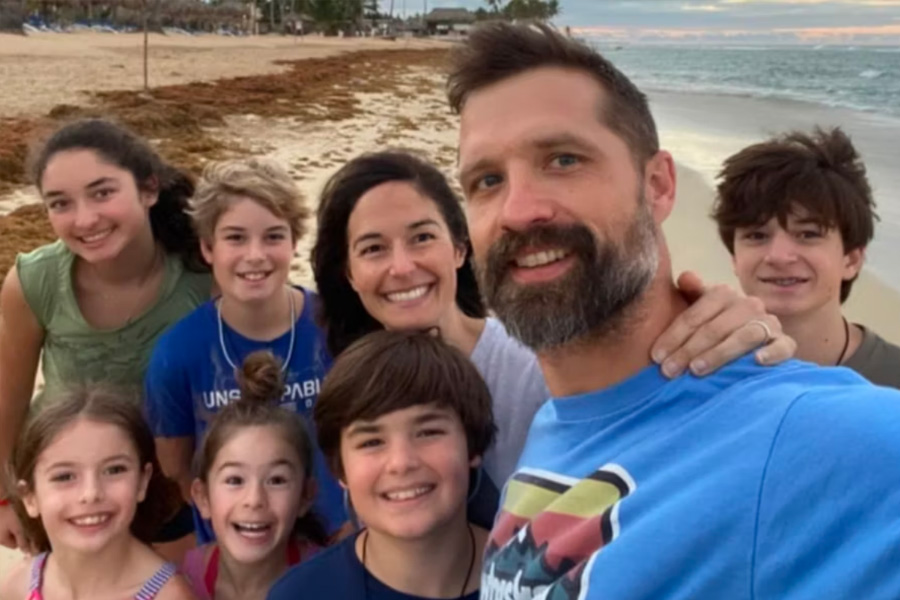
The Hayes children form a lively and expansive constellation. Their names appear in family videos, posts, and affectionate stories. Oakleigh is remembered alongside them, not apart from them. The family count reaches seven children. That number gives the household a generous and crowded texture. It also means family memory contains both presence and absence. The table below outlines the family structure.
| Name | Relationship | Public note |
|---|---|---|
| Walker Hayes | Father | Country pop singer songwriter and public family figure |
| Laney Beville Hayes | Mother | Central parent and survivor of the delivery crisis |
| Lela Hayes | Sister | Often visible in family moments and performances |
| Chapel Hayes | Sibling | Part of the older childhood circle |
| Baylor Hayes | Sibling | Appears in family content and anecdotes |
| Beckett Hayes | Sibling | Known through playful family storytelling |
| Loxley Hayes | Sibling | One of the younger children |
| Everly Hayes | Sibling | Among the youngest children in the household |
| Oakleigh Klover Hayes | The child remembered | Born and died on June 6, 2018 |
A large family often develops its own internal cadence. Names become shorthand. Stories become shared currency. Younger children inherit the memory of siblings they never met. That inheritance can be gentle and complicated. It asks the family to make room for joy and sorrow together. The Hayes family seems to do exactly that. Oakleigh remains present in that shared domestic language. Her place is quiet, but it is not empty.
Rituals of Remembrance
Anniversaries matter profoundly in this story. They return each year with exactness and emotional force. A date like June 6 becomes a recurring threshold. Families often use ritual to contain pain. The Hayes family has marked Oakleigh through posts and reflections. Those gestures create a public form of remembrance. They also affirm that memory can be active rather than passive. A remembered child remains relationally present.
Ritual can be subtle. It may involve a caption, a prayer, or a family conversation. It may also involve private gestures unseen by the public. Such acts are rarely dramatic. Their power lies in repetition. Repetition transforms sorrow into a lasting practice. It allows the family to say the same name again and again. In that saying, Oakleigh continues to matter. The act itself becomes a small sanctuary.
Memory in this family does not appear as a single monument. It appears as a pattern. Patterns are easier to carry than grand declarations. They fit into ordinary life. They can sit inside a school morning or a tour schedule. They can appear during quiet evenings at home. This makes remembrance portable. It also makes it durable across years. Oakleigh’s memory lives in that portability.
Public Life and Private Pain
Walker Hayes’s rise brought the family into wider view. That visibility can be generous. It can also feel invasive. Public attention often treats family life as narrative material. Yet real families must live beyond the frame. The Hayes family has negotiated that tension with unusual candor. They have not turned grief into performance. Instead, they have allowed memory to remain visible without becoming spectacle. That balance is difficult to sustain.
The public tends to see clean arcs. Success, heartbreak, healing, and renewal each get simplified. Real life behaves differently. It moves by recurrence, interruption, and delay. Oakleigh’s story reminds observers of that irregularity. One date can shape many later years. One loss can subtly alter a household’s tempo. One remembered child can remain part of a family’s public and private grammar. Such realities rarely fit neat storytelling.
Music intensifies this dynamic. Songs invite emotional identification. They can also create distance between audience and household. Walker’s work travels far beyond the family kitchen. Still, his family life remains threaded through his public identity. That makes Oakleigh’s memory more visible to listeners. It also gives the family space to articulate grief in their own language. The result feels unusually human. It is neither polished nor hidden.
The Language of Loss
Numbers describe the facts with merciless clarity. One birth. One death. Seven children. One delivery date. Yet numbers cannot carry emotional depth by themselves. They need narrative, memory, and ritual. The date June 6, 2018, functions as a hinge in the family biography. It separates what came before from what followed. It also unites them in remembrance. Years later, the same date still resonates.
Language becomes crucial when life is this brief. A name can do enormous work. Oakleigh Klover Hayes is not an abstraction. It is a name tied to kinship, history, and grief. Each time it is spoken, the family renews a bond. That bond exceeds public curiosity. It belongs to the inner life of the household. Still, the public has been invited to witness it. That witnessing can be respectful when handled with care.
Loss also rearranges ordinary vocabulary. Future, birthday, crib, and nursery take on a different texture. Words that once implied anticipation can become elegiac. The family lives inside that altered lexicon. It is a language with tender edges. It preserves what cannot continue in the usual way. It also keeps room for love after tragedy. That is a demanding but beautiful labor.
Oakleigh in the Family Imagination
Children who die very young often remain lives of possibility. They become a kind of emotional horizon. Families imagine what might have been, while knowing certainty is impossible. That impossibility can deepen longing. It can also sharpen devotion. Oakleigh lives inside that liminal space. She is remembered not through a full biography, but through an enduring familial regard. Such remembrance has its own gravity.
The family imagination preserves more than facts. It preserves atmosphere. It carries affection, shock, and reverence together. Oakleigh’s memory sits within that atmosphere like a luminous vestige. She is part of the household’s moral geography. Her name marks the space where grief and gratitude overlap. That overlap is difficult to articulate. Yet the family seems to honor it naturally. Their remembrance suggests a refusal to simplify love.
Key Takeaways
Oakleigh Klover Hayes was born and died on June 6, 2018, during a traumatic delivery. Her parents are Walker Hayes and Laney Beville Hayes, and she is remembered as part of a seven child family. The Hayes family has marked her through anniversaries, posts, and ongoing remembrance. Walker’s public career brought additional attention to the family’s story, but the core remains intimate. Oakleigh’s memory persists because the family has made room for it with patience, candor, and recurring devotion.